“Why should I bother? What difference can one house make? Isn’t that the government’s job, or big business’s?”
We hear versions of this all the time, and it’s a fair question. So here’s an honest answer, from people who’ve spent more than a decade making homes warmer and cheaper to run.
You don’t have to be an eco-warrior
Most of our customers don’t start out wanting to save the planet. They want lower bills, a warmer home or a bit more control over their energy. That’s absolutely fine. The good news is that almost everything that cuts your carbon footprint at home also does those things.
1. It’s your money
Every unit of energy that leaks out through an uninsulated loft or wall is energy you’ve paid for. Insulation keeps that heat in. Solar panels let you make some of your own electricity, and a battery lets you use it in the evening instead of buying it from the grid.
Cutting waste is the most practical way to cut your carbon footprint, and it shows up on your bills.
2. A warmer, healthier home
A well-insulated home holds its warmth for longer, has fewer cold spots and is more comfortable to live in. Cold, poorly insulated homes are also more prone to condensation and damp. Reducing your home’s energy use isn’t a sacrifice: it usually means living more comfortably, not less.
3. Less exposed to price shocks
Recent years have shown how quickly energy prices can jump because of events far away. The less energy your home wastes, and the more it generates and stores itself, the less those shocks affect you.
4. A home that’s ready for the future
Energy efficiency is increasingly part of how homes are valued, let and sold, and the rules for new and rented homes keep tightening. Improvements made now help keep your home ahead rather than behind.
“But what difference does one house make?”
Buildings produced 22% of the UK’s greenhouse gas emissions in 2024, and around two-thirds of that came from our homes (UK Government). No single home fixes that, just as no single vote decides an election. But together, millions of homes add up to one of the biggest sources of emissions in the country.
And change is happening household by household. Around 1.5 million homes in England already had solar panels in 2023, about 6% of all homes (English Housing Survey), and every one of them is a family that made a practical decision for their own reasons.
Why you?
Because it’s your home, your bills and your comfort. The carbon saving is a bonus that comes along with all of that.
What makes up your home’s carbon footprint?
For most households, the biggest part of the footprint at home comes from two things:
- Heating and hot water: around 86% of households in England use a gas-fired main heating system (English Housing Survey 2023–24), and heating is usually the largest single share of a home’s footprint
- Electricity: lighting, appliances, cooking and, increasingly, electric cars and heat pumps
That’s why the most effective changes focus on keeping heat in, using less energy to stay comfortable, and generating cleaner electricity at home.
Free and low-cost changes you can make today
Before spending anything significant, a few simple habits make a real difference:
- Turn the thermostat down a degree. Most people barely notice the difference in comfort, and the Energy Saving Trust estimates it saves around 305kg of CO2 a year in a typical home.
- Use heating controls properly. Set timers and radiator valves so you only heat the rooms you use, when you use them.
- Stop draughts. Gaps around doors, windows, letterboxes and floorboards let warm air escape. Draught excluders are cheap and easy to fit.
- Switch to LED bulbs. They use a fraction of the electricity of old bulbs and last far longer.
- Turn off standby. Televisions, consoles and chargers left on standby use electricity all day.
- Wash at lower temperatures and dry clothes outside when you can.
These are worth doing in any home. But they only go so far, because they can’t stop heat escaping through an uninsulated loft or walls.
The bigger changes that make the biggest difference
Loft insulation. Heat rises: around a quarter of the heat in an uninsulated home is lost through the roof, according to the Energy Saving Trust. Topping up to the recommended depth of 270mm is one of the simplest improvements you can make, and it usually takes less than a day.
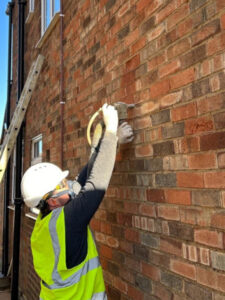
Cavity wall insulation. Most homes built from the 1920s onwards have cavity walls. Around a third of all heat in an uninsulated home is lost through the walls (UK Government), so filling an empty cavity keeps rooms warmer for longer. Every cavity wall installation we carry out comes with a 25-year IAA (formerly CIGA) guarantee.
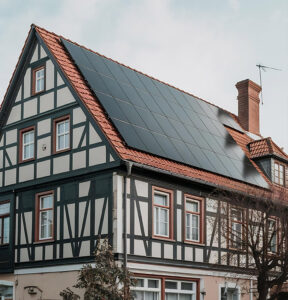
Solar panels. Solar panels turn daylight into electricity, so you buy less from the grid. They work all year in the UK, including on cloudy days, and generate the most from spring to autumn. Our most common home system is 10 panels.
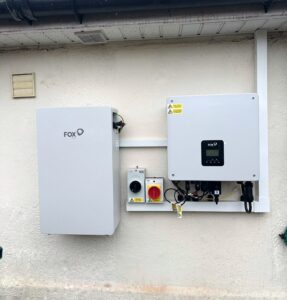
Battery storage. A battery stores the spare solar power you make during the day so you can use it in the evening, when most households use the most electricity. It can also charge on a cheaper overnight tariff in winter.
Heating upgrades. Once a home is well insulated, low-carbon heating such as a heat pump becomes a practical option for many homes. Insulating first means any new heating system can be smaller and work more efficiently.
Common myths
“Solar panels don’t work in the UK.” They do. Panels work on daylight, not just direct sunshine. Read more: Do solar panels work in winter?
“Insulation causes damp.” Not when it’s installed properly in a suitable home. Most problems come from unsuitable properties or poor installation. Read more: Can cavity wall insulation cause damp?
“It’s only worth it if you’re staying for years.” Comfort and lower bills start straight away, and energy-efficient homes are increasingly attractive to buyers and tenants.
“I have to do everything at once.” You don’t. Most homes improve step by step, starting with whatever makes the biggest difference for that home.
Where to start
You don’t have to do everything at once. A sensible order is:
- Stop the heat escaping first: loft insulation and cavity wall insulation are often the simplest, most cost-effective steps
- Generate your own electricity: solar panels suit most homes with a reasonable roof
- Store it for later: a battery lets you use your solar power in the evening
Got questions? Our FAQ centre answers the most common ones.
Frequently asked questions
How can I reduce my carbon footprint at home?
Start with free changes like turning the thermostat down, stopping draughts and switching to LED bulbs. Then look at the bigger improvements: loft and cavity wall insulation to keep heat in, and solar panels with battery storage to generate and store your own electricity.
What is the biggest part of a home’s carbon footprint?
For most UK homes, it’s heating and hot water, usually from a gas boiler. That’s why keeping heat in with insulation is often the best first step.
Does insulation reduce carbon emissions?
Yes. Insulation means your home needs less energy to stay warm, so your boiler burns less gas and your emissions fall, along with your heating bills.
Are solar panels worth it in the UK?
For most homes with a suitable roof, yes. They generate electricity all year, reduce how much you buy from the grid, and can earn you money through export payments. Adding a battery lets you use more of your own solar power.
What should I do first: insulation or solar?
If your loft or cavity walls aren’t insulated, that’s usually the best place to start, because it stops energy being wasted. Solar and batteries then reduce the energy you buy. Many homes do both.
Is it expensive to make my home more energy efficient?
It depends on your home and what it needs. Some changes are free, and the bigger improvements vary in cost. A free survey will tell you what would make the most difference for your home before you commit to anything.
A free, no-pressure survey
We’re an MCS-certified installer based in Harold Wood, Essex, helping homes across London, the South East and the East of England since 2012. We’ll look at your home, tell you honestly what would make the biggest difference, and leave the decision to you.
Call 020 3411 4885 or request a free quote.
Sources
- UK Government: heat and buildings factsheet (Carbon Budget Delivery Plan)
- English Housing Survey 2023 to 2024: low carbon technologies in English homes
- Energy Saving Trust: home energy saving behaviours
- UK Government: wall insulation factsheet
- Homebuilding & Renovating: heat loss in a house (citing the Energy Saving Trust)